
The deduction will be higher and net take-home pay will fall.

A lottery system would decide the participants who would get to attend the public reception of Prime Minister Narendra Modi on September 28 at the prestigious Madison Square Garden in New York City, organisers of the event have said.

'This is basically aimed at vilifying Nehruvian ideals.' 'Why?' 'Because, Nehruvian leadership is seen by Hindutva forces as the one which did not let them have their Hindu Raj.' 'The Hindutva proponents have always assumed that had Sardar become the first prime minister, India could never have become a secular State,' says Mohammad Sajjad.

Education, jobs, health and more: Experts share their wishlist.

'There is no tried and true recipe for creating Silicon Valleys.' 'Attracting and creating a mass of truly dynamic entrepreneurs is at the core and among the hardest and most necessary ingredients.' 'In the US, close to 60% of the top valued tech companies were started by immigrants who found the start-up climate to be superior to where they came from.' 'India would clearly benefit from attracting back its talented Diaspora, but it also needs to hold onto those entrepreneurs.'

E-governance roll-out needs better infrastructure, privacy protection.

Here's the full text of President's Ram Nath Kovind's address to the joint sitting of both houses of Parliament on the first of Budget Session 2022.

At 89th, India is the lowest-ranked among the BRICS.

'The revival of household savings and investment is the litmus test of whether we are on the road to recovery,' says Nitin Desai.

Any NGO critical of the government is unlikely to receive a green signal. The new amendment will leave NGOs vulnerable to harassment. It was the NGO sector that helped provide compassion and food to millions of people during the lockdown. The new Bill will render such cooperation and camaraderie impossible in future, observes Rashme Sehgal.

'When we say we want to increase pension participation, do we want to increase participation through the savings route?' 'Or do we want people to save in specific pension products?' asks Renuka Sane.

ISB professor Tarun Jain talks to Shobha Warrier/Rediff.com about what the government must do to achieve 8 pc growth.

Agri-enterprises are finding it hard to expand due to lack of commercial guidance.

Here's the full text of President Ram Nath Kovind's address to the nation on the eve of 72nd Republic Day.
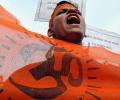
India's majoritarian regime is now making a dangerously fast-paced move towards theocracy, like its western counterpart did a few decades ago, warns Mohammad Sajjad.

'The Jalan Committee has now provided very clear guidelines on how the (RBI's) balance sheet should be looked at, what kind of disclosures should be made, what are the principles on which the Contingency Risk Buffer should be maintained, what should be the revaluation reserves, and the market risk to the Contingency Risk Buffer.'

The niche banks - small finance and payments banks -have been set up to further the regulator's objective of deepening financial inclusion.
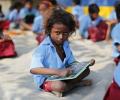
Prof Pradip Narayan Ghosh, former Vice Chancellor of Jadavpur University, Kolkata tells us how the quota system has been unable to make higher education accessible to a large section of society.

Will Katra's gain be Jammu's loss? Locals in the area are worried that the development of the new railway line will affect their livelihoods, as pilgrims heading to Vaishno Devi will be able to bypass Jammu completely. This will affect tourism, the main source of income for many in the area, observes Upasana Pandey.

Here's the full text of President Ram Nath Kovind's customary address to the joining sitting of Parliament on the first day of the budget session.

Shikha Verma explains how child insurance plans can help you achieve your child's financial dreams.

'I cannot conceive of any reason than my unsparing criticism of government policies that the government picked me to send a message to many who dare to take it on.'

From India's fight against COVID-19 to China face-off, Kovind spoke on several issues during the televised address.
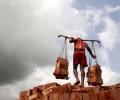
Dr Ashwani Mahajan, all India co-convenor of the Swadesh Jaagran Manch and an associate professor at the Delhi University, discusses the state of the Indian economy in an interview with Rediff.com's Shobha Warrier.

'The corporate sector says by 2022 they will create 300 million jobs.' 'In the last 70 years we didn't do it, how will we do it in 5 years?' 'Only agriculture can bail out the economy. Unfortunately, it is not being looked into.'

'We want to connect unique skills that students have with the unique jobs being created.'
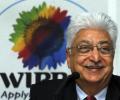
'Wealthy Indians don't give as much as Americans because they believe they must leave their wealth to their children.'
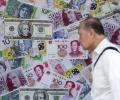
For several years the Chinese authorities have been taking steps to internationalise the use of the yuan.
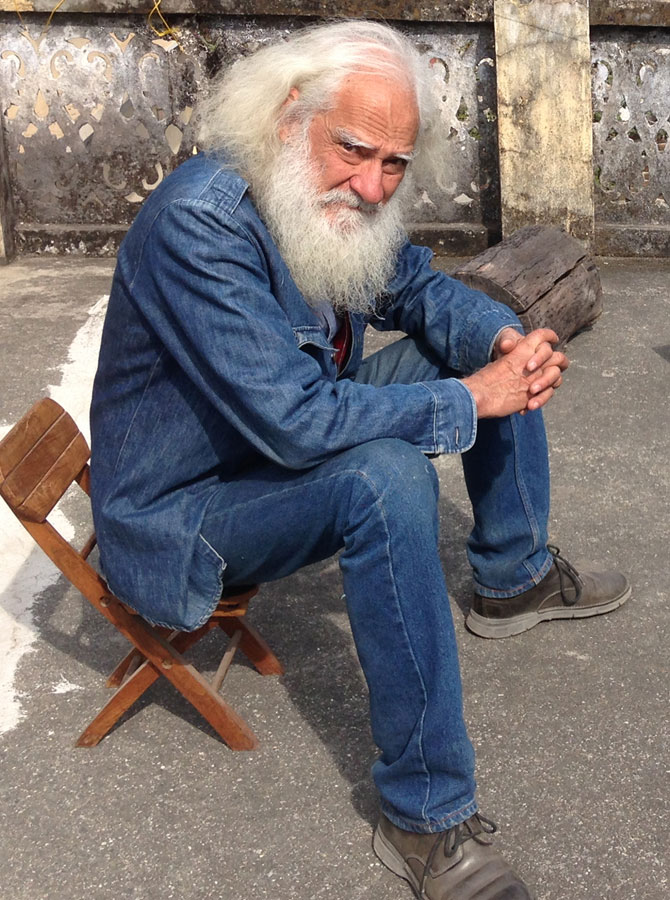
'Not allowing people to speak or listen is the biggest act of anti-nationalism,' says Arvind Krishna Mehrotra, one of India's finest poets.

No country has achieved a faster, deeper modern transformation than China, says former ambassador Kishan S Rana.
Premier Li Keqiang highlighted his government's performance in the last one year and the challenges ahead in various fields. Compared to other reports by his predecessors, Li spoke more frankly about the mounting challenges faced by the country. Srikanth Kondapalli on the two recent Chinese parliament sessions.

In his address to the Harvard class of 2017, Thursday, he shared his Harvard memories and spoke about finding purpose and meaning in one's life.

A data plan currently priced at Rs 100 should not cost more than Rs 34, if India has to make the Internet affordable for 80 per cent of its population.

Can we make high speed 4G Internet available at 10 cents per GB, and make all voice calls free of cost -- that too in a large and diverse country like India? Can we make high-quality but simple breast cancer screening available to every woman, that too at the extremely affordable cost of $1 per scan? Can we make a portable, high-tech ECG machine which can provide reports immediately and that too at the cost of 8 cents a test? Can we make an eye imaging device that is portable, non-invasive and costs 3 times less that conventional devices? Can we make a robust test for mosquito-borne dengue, which can detect the disease on day 1, and that too at the cost of $2 per test? Amazingly, says Dr R A Mashelkar, the eminent scientist, all this has been achieved in India, not only by using technological innovation but also non-technological innovation.

At the Paris climate change summit, there is talk of restricting temperature rise to 1.5?C instead of 2?C, which has been negotiated so far. This would give India less space to grow by limiting carbon emissions further, reports Darryl D'Monte, reporting exclusively for Rediff.com from the French capital.

The Reserve Bank of India (RBI) on Thursday paved the way for niche banking by issuing draft guidelines for setting up payment banks and small banks.

Medha is an organisation created with the idea of bringing in better employment opportunities and life for educated youth.

Finance Minister Arun Jaitley presented the Union Budget.

Against all odds, the young and determined Varun Sharma has taken up the responsibility to bring electricity, education and empowerment to a remote tribal village in Odisha, says Manu A B.

'Let me talk about young Indian startups with their hearts in the right place and how they are proving that innovations that represent 'affordable excellence' -- breaking the myth that 'affordability' and 'excellence' cannot go together -- is indeed possible!' says Dr R A Mashelkar, the eminent scientist, in this fascinating feature.
